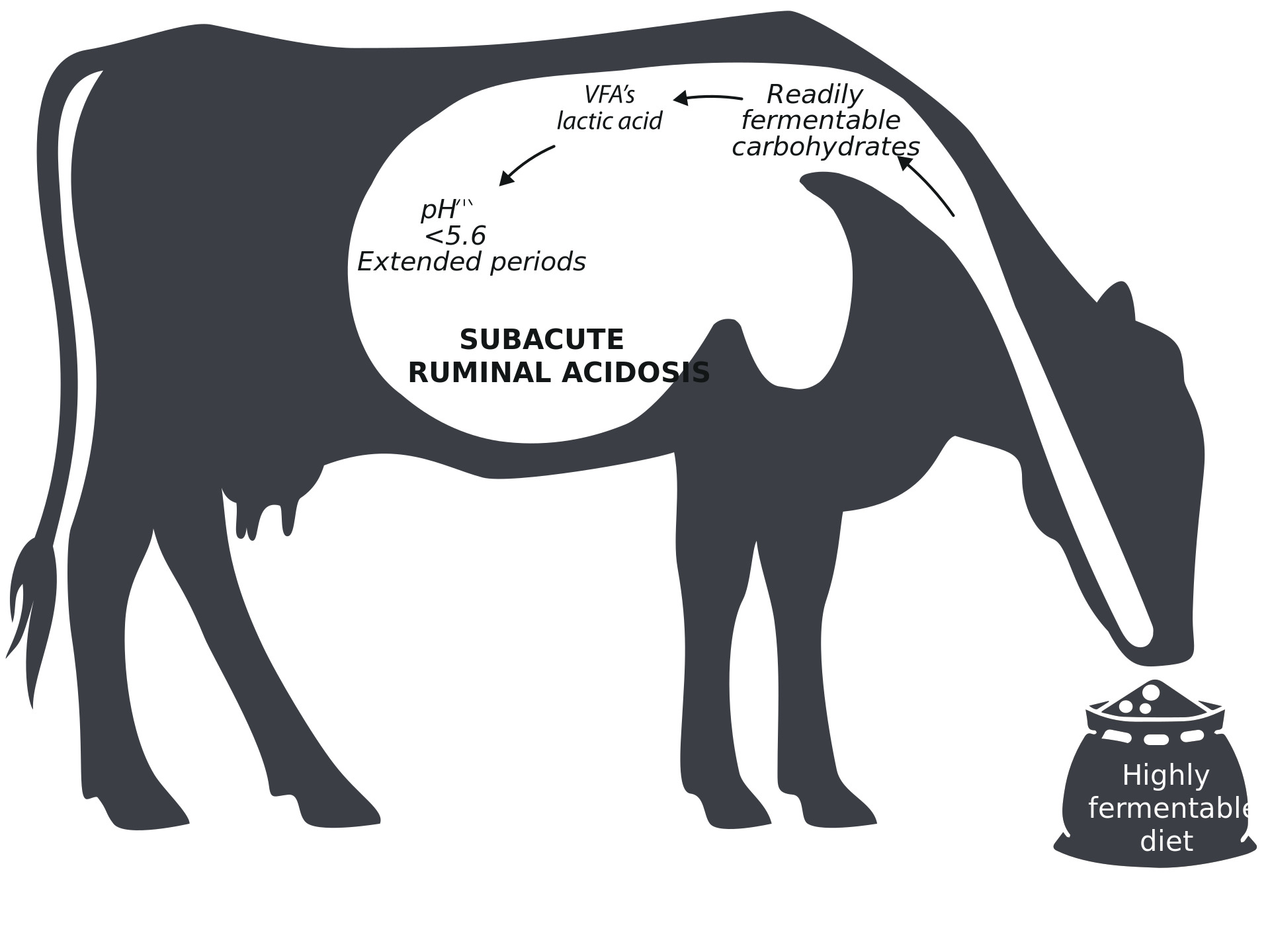
Subacute ruminal acidosis (SARA) is a prevalent metabolic disorder in feedlot beef cattle, triggered by prolonged periods of low ruminal pH (typically below 5.6-5.8) due to high-concentrate diets. Unlike acute acidosis, SARA is intermittent and often resolves without immediate intervention, but it leads to subtle, chronic issues that reduce performance, health, and profitability. Early detection is key, as clinical signs are mild and non-specific.
Primary Behavioral and Intake-Related Signs
The most common early indicators revolve around feeding behavior and intake patterns:
- Reduced or Cyclic Feed Intake: Cattle eat less overall or show fluctuating daily intake, often leaving feed in bunks despite adequate energy needs.
- Poor Body Condition: Animals appear thin or fail to gain weight efficiently, even with access to high-energy rations.
- Decreased Rumination: Less cud-chewing time, leading to reduced saliva production (a natural rumen buffer).
Gastrointestinal and Fecal Signs
Digestive disturbances are frequent and observable:
- Unexplained Diarrhea or Loose Manure: Feces may be loose, bubbly, foamy, or contain undigested grain/fiber particles—classic indicators of hindgut fermentation spillover.
- Mild Bloat or Discomfort: Occasional abdominal distension without severe pain.
Secondary Complications and Long-Term Signs
SARA often triggers cascade effects weeks or months later:
- Laminitis and Hoof Issues: Inflammation of the hoof laminae leads to lameness, sole ulcers, white line disease, or deformed hooves. Prevalence can increase significantly in affected herds.
- Liver Abscesses: Common in feedlots (up to 30% incidence), resulting from rumen wall damage allowing bacteria to enter the bloodstream.
- Reduced Performance: Lower average daily gains, poorer feed efficiency, and higher susceptibility to other diseases like respiratory issues.
Herd-Level Indicators in Feedlots
At the pen or herd level, watch for:
- High variability in intake across days.
- Increased sorting of feed (preferring concentrates over roughage).
- Elevated prevalence of lameness (e.g., >10-20% of cattle affected).
- Post-mortem findings like rumenitis (inflamed rumen wall) or discolored mucosa in slaughtered animals.
Diagnosis often combines observation with rumen pH testing (via rumenocentesis) or fecal grain screening. In beef feedlots, SARA impacts growth rates and carcass quality, making vigilant monitoring essential.
Early recognition of these signs allows timely interventions like diet adjustments, improving animal welfare and economic outcomes.