Empowering Smallholder Farmers Through Training in Kenya – How Gatiko Is Driving Sustainable Growth
Why Training Smallholder Farmers Is Critical in Kenya
1. Smallholders Dominate Kenya’s Agriculture
Kenya’s agriculture sector is largely driven by smallholder farmers cultivating less than five acres of land. These farmers produce most of the country’s livestock products, cereals, vegetables, and cash crops. However, many still rely on traditional practices that limit yields and profitability.
Training enables farmers to transition from subsistence farming to commercial, market-driven agriculture, improving efficiency and long-term sustainability.
2. Closing the Knowledge Gap
Many smallholder farmers lack access to extension services due to limited government resources and geographic barriers. As a result, farmers may not fully understand:
- Improved livestock feeding and breeding techniques
- Disease prevention and animal health management
- Climate-smart farming practices
- Record-keeping and financial planning
- Quality standards required by modern markets
Farmer training programs fill this gap by delivering practical, hands-on knowledge that can be applied immediately on the farm.
3. Improving Productivity and Incomes
Studies across Kenya show that trained farmers consistently achieve higher yields and better livestock performance. In livestock systems, training on proper feeding regimes, animal health, and housing can significantly increase milk yields, weight gain, and survival rates.
Higher productivity translates directly into:
- Increased household income
- Better food security
- Improved living standards for rural families
4. Strengthening Climate Resilience
Climate change has intensified droughts, unpredictable rainfall, and pasture shortages across Kenya. Training equips farmers with climate-smart practices such as:
- Fodder production and conservation
- Water harvesting and efficient use
- Improved pasture management
- Early disease detection and prevention
These skills reduce vulnerability and help farmers adapt to changing environmental conditions.
The Role of Private Sector Training in Agriculture
While government and NGOs play an important role in farmer education, the private sector is increasingly becoming a key driver of impactful training programs. Agribusinesses bring practical, market-oriented experience and often link training directly to income opportunities.
Companies like Gatiko integrate farmer training into commercial livestock value chains, ensuring that knowledge transfer results in measurable economic outcomes for farmers.
How Gatiko Empowers Smallholder Farmers Through Training
1. Practical, Hands-On Livestock Training
Gatiko Company Ltd focuses on practical training programs tailored to smallholder livestock farmers. Rather than theory-based learning, Gatiko emphasizes:
- Proper cattle feeding and nutrition
- Animal health management and biosecurity
- Housing, hygiene, and stress reduction
- Growth monitoring and weight management
Farmers are trained on how to produce healthier animals that meet market standards, reducing losses and improving returns.
2. Promoting Modern Feeding and Fodder Practices
Feed availability and quality remain major challenges for smallholder farmers. Gatiko trains farmers on:
- Fodder crop selection and production
- Hay and silage making for dry seasons
- Efficient feed utilization to reduce costs
- Balanced rations for beef and dairy cattle
By understanding proper feeding systems, farmers can maintain consistent livestock performance throughout the year, even during drought periods.
3. Linking Training to Market Access
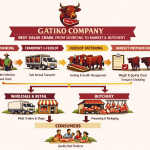
One of the biggest barriers for smallholder farmers is lack of reliable markets. Gatiko addresses this by integrating trained farmers into its livestock supply ecosystem.
Through this approach:
- Farmers understand market requirements
- Livestock quality improves
- Price transparency increases
- Farmers gain confidence to invest in production
Training becomes directly connected to income generation rather than remaining theoretical.
4. Encouraging Record-Keeping and Farm Management
Gatiko emphasizes the importance of basic farm management skills, including:
- Livestock records and growth tracking
- Feeding cost analysis
- Production planning
- Disease treatment logs
These skills help farmers make informed decisions, reduce wastage, and improve profitability over time.
5. Supporting Youth and Community Inclusion
Youth unemployment remains a major challenge in rural Kenya. Gatiko’s training approach encourages youth participation in livestock farming by presenting agriculture as a viable, modern business opportunity.
By promoting efficient production systems and technology-driven decision-making, Gatiko helps attract younger farmers into the livestock value chain while strengthening community resilience.
The Broader Impact of Farmer Training
Economic Empowerment
Trained farmers produce better livestock, access stable markets, and earn higher incomes. This economic empowerment creates a ripple effect that benefits families, local economies, and service providers within rural communities.
Improved Food Security
When smallholder farmers are productive and resilient, food availability increases. Livestock products such as beef and milk become more reliable, affordable, and accessible across Kenya.
Sustainable Agricultural Practices
Training promotes responsible land use, proper waste management, and sustainable feeding systems. These practices protect natural resources while ensuring long-term agricultural viability.
Why Training-Based Models Work
Unlike input-only support programs, training empowers farmers with long-term skills rather than short-term solutions. Knowledge stays with the farmer, allowing continuous improvement across production cycles.
Gatiko’s model demonstrates how combining training, market access, and sustainable production systems creates lasting value for both farmers and agribusinesses.
The Future of Smallholder Farmer Empowerment in Kenya
As Kenya’s population grows and demand for quality animal products rises, empowering smallholder farmers through training will be more important than ever. Public-private partnerships, digital tools, and community-based learning models will shape the future of agricultural education.
Gatiko’s farmer-centric approach positions it as a key contributor to Kenya’s transition toward modern, sustainable, and inclusive livestock farming.
Conclusion
Empowering smallholder farmers through training is one of the most effective strategies for transforming Kenya’s agricultural sector. By equipping farmers with practical skills, market knowledge, and sustainable farming practices, training unlocks productivity, resilience, and economic growth.
Through hands-on livestock training, modern feeding systems, and strong market linkages, Gatiko Company Ltd is playing a vital role in strengthening smallholder farmers and building a more resilient livestock value chain in Kenya.